





▼Click here for SilverStream Stiletto Development Story Vol.1
From 2023 onward, development moved into full-scale field testing.
Extensive on-the-water tests were conducted across a wide range of situations, including rivers, brackish areas, and small rocky shorelines.
At this stage, the focus shifted to translating the subtle sensations obtained through actual fishing—details that cannot be fully refined through factory-based design alone—directly into the blank.
SilverStream 95 Stiletto – Prototype Specifications
-
Power Class: Medium Heavy
-
Line Setting: PE 0.8–1.5
-
Guide Setting: Torzite Titanium Guides
-
Lure Weight: Approx. 10 g (min) to 35 g (max)
-
Target Areas: Midstream rivers, river mouths, and small rocky shorelines
While securing sufficient butt power expected of an MH-class rod, the 95 Stiletto was fundamentally designed to prioritize high sensitivity for inducing bites and the ability to execute delicate lure control.
No.2 Test Report
Spring seabass patterns are often driven by small baitfish such as whitebait, juvenile ayu, and shrimp. These situations demand adaptability—accurately reading the conditions of the day and switching seamlessly between retrieves, lift-and-fall, and twitching techniques.
With lightweight lures in particular, an overly stiff tip tends to make lure action too rigid, increasing the likelihood of fish rejecting the presentation.
For this reason, special emphasis was placed on achieving a natural, stable retrieve that blends smoothly with the water, while also carefully evaluating response during vibration lift-and-fall and shad twitching actions.
Refinements
-
The tip section of the No.2 prototype offered excellent operability and sensitivity with small plugs; however, the guide diameter was slightly larger, giving the impression that sensitivity was being compromised.
→ The guide size was reduced by one step to improve retrieve sensitivity when using small plugs. -
With the current reel position, the grip length felt slightly short, causing subtle instability during retrieval.
→ The grip length and reel seat position were extended. The grip end was repositioned for easier underarm bracing, significantly improving stability.
■Fishing Results with the No.2 Prototype
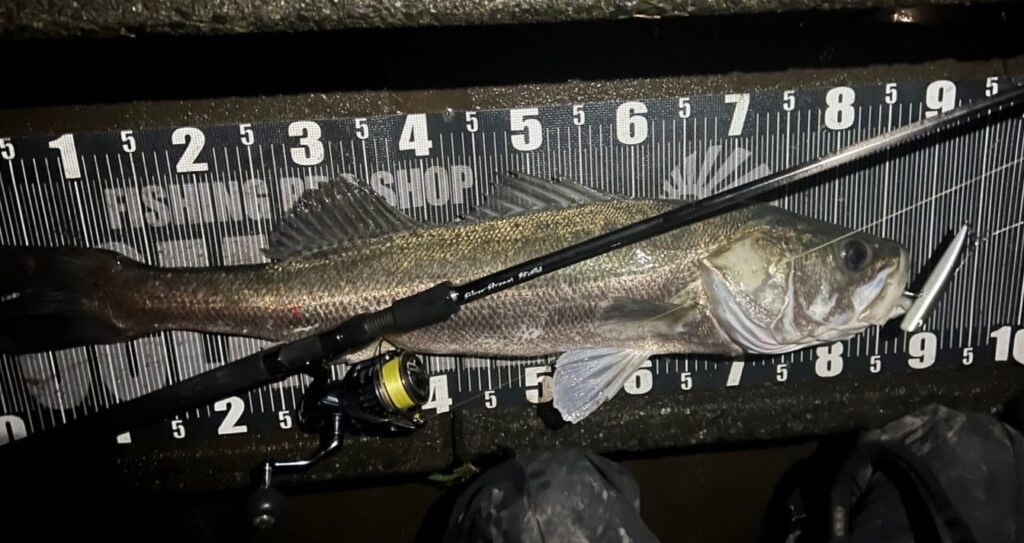
During the autumn season of the same year, testing focused primarily on the gizzard shad pattern.
The No.2 prototype, characterized by its crisp feel and excellent response, paired exceptionally well with minnows around 14 cm / 30 g, delivering the intended operability at a very high level.
Fine line control during drift presentations was also effortless, reinforcing the sense that the concept of high sensitivity for inducing bites and a rod capable of delicate presentations was nearing its ideal form.
However, when the rod was deeply loaded, there were instances where the butt section retained more stiffness than anticipated. In situations involving head shakes or shallow hook penetration, a slightly higher tendency for hook-outs was also observed.
Attempts to improve follow-through and compliance introduced a dilemma: enhancing forgiveness would inevitably diminish the crispness and sensitivity that define the Stiletto series.
This challenge—characteristic of high-modulus blanks—proved difficult to overcome.
It was around this time that we learned of the development of a new material offering both high modulus performance and superior elongation and strength.
From this point forward, the blank design of the 95 Stiletto would evolve into the No.3 prototype, built around this new material.
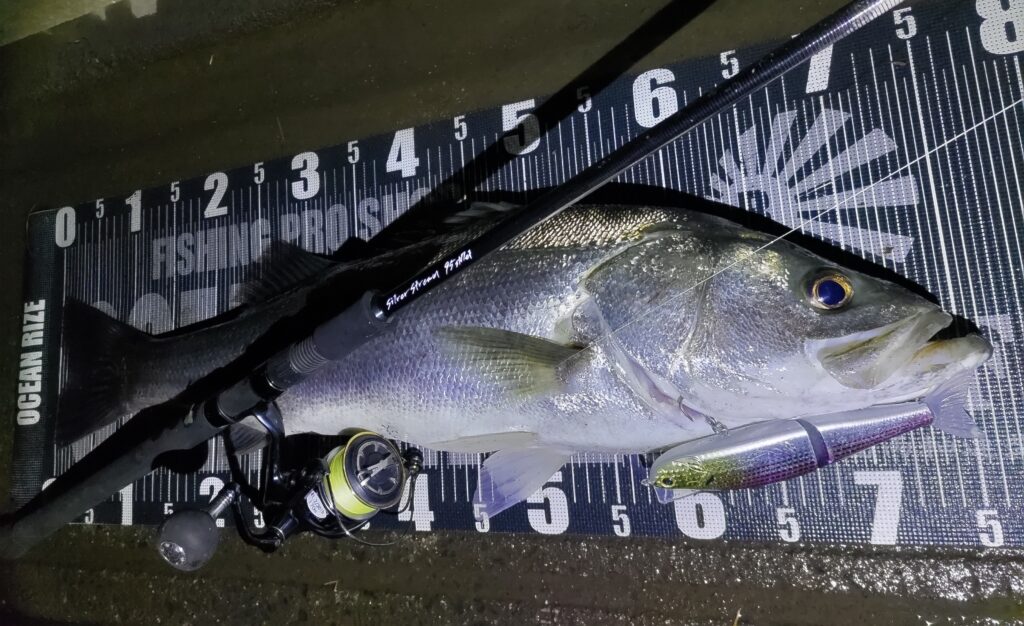
■Fishing Results with the No.2 Prototype
▼To be continued in SilverStream Stiletto Development Story Vol.3


